Winrose Special Projects
High Efficiency Homes.
Built to Perform.
Exceptional homes designed and constructed around comfort,
efficiency and long-term performance.

Exceptional homes designed and constructed around comfort,
efficiency and long-term performance.
A high-efficiency home is designed to maintain a comfortable internal environment while requiring substantially less energy to heat and cool. Rather than relying solely on renewable technologies, the focus begins with the building fabric — insulation, airtightness, glazing, thermal bridging and controlled ventilation all working together.
For a new home, these principles can be considered from the outset and incorporated throughout the construction.
But high-efficiency living isn’t restricted to new builds.
Winrose can also transform existing properties, using carefully planned improvements to the building fabric and associated systems to significantly enhance thermal performance, comfort and energy efficiency.
The objective is simple: a home that feels better to live in and requires less energy to do so.
True building performance comes from combining multiple elements correctly. Improving one component in isolation can only achieve so much; the greatest gains come when the building fabric and its systems are considered together.
Careful design and construction around junctions, openings and structural elements reduces areas where heat can bypass the main insulation layer.
Energy-efficient windows and doors combine advanced glazing with well-insulated frames and careful installation to reduce heat loss while making effective use of natural light.
Older homes were rarely designed around the levels of thermal performance expected today. Poor insulation, uncontrolled air leakage, thermal bridging and inefficient windows can all contribute to high energy demand, uncomfortable temperatures and inconsistent performance throughout the property.
A carefully planned high-efficiency renovation can address many of these weaknesses.
Depending on the property, this may involve upgrading roof, wall and floor insulation; improving airtightness; replacing windows and doors; addressing thermal bridges; introducing controlled ventilation; and integrating more efficient heating and renewable technologies.
The challenge is achieving these improvements as part of the building as a whole.
Winrose can undertake substantial renovations and conversions where improving energy performance forms a fundamental part of the project — combining major construction work with building-fabric improvements to create a home that retains its character while performing very differently.
For homeowners already considering a major renovation, extension or complete transformation, it can be the ideal opportunity to rethink not only how the property looks, but how it performs for decades to come.
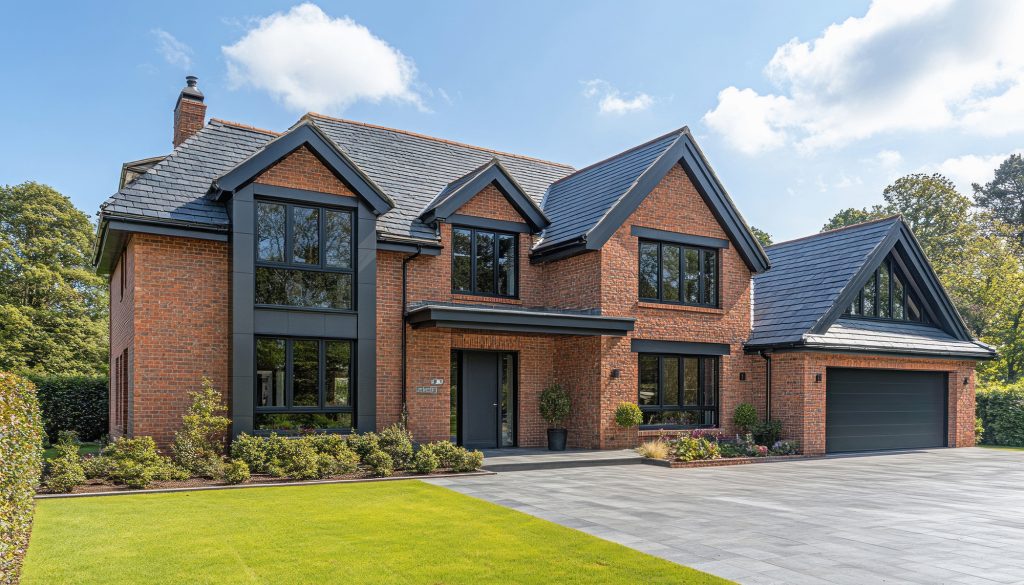
Consistent internal temperatures can reduce the cold spots and draughts associated with less efficient buildings. Better-performing walls, roofs, floors and glazing help internal surfaces remain warmer, while controlled ventilation can provide a continuous supply of fresh air without relying on uncontrolled heat loss.
The result can be a quieter, more comfortable and more stable internal environment throughout the seasons.
Lower energy demand is an important benefit, but for many homeowners the improvement in everyday comfort becomes equally significant.
And because the performance is designed into the building fabric itself, many of those benefits continue regardless of how energy technology changes in the future.
A high-efficiency home is designed or upgraded to significantly reduce energy demand while improving comfort and overall building performance.
There is no single universal specification that a property must meet to be described as highly energy efficient. The level of performance can therefore be tailored around the building, the client’s objectives and the scope of the project.
For some properties, the goal may be a dramatic improvement over their existing performance. For a new build, considerably more ambitious standards can be targeted from the outset.
The important principle is that efficiency is considered as part of the whole building rather than as a collection of individual energy-saving products.
Passivhaus is different. It is a defined building-performance standard with rigorous requirements covering areas including energy demand, airtightness, thermal comfort and building-fabric performance.
Achieving certified Passivhaus status requires the project to be designed, modelled, constructed and independently verified in accordance with the relevant standard.
That means a home isn’t a Passivhaus simply because it has very high levels of insulation or uses Passivhaus-inspired construction techniques.
Certification is what distinguishes a certified Passivhaus project.
Whether you’re planning an energy-efficient new build or looking to transform the
performance of an existing property, talk to Winrose about what can be achieved.